Rocky Point Talk archive

Sea of Cortez Grouper- population and biology research and resources

Started by moore_rb · Apr 28, 2012 · 45 replies
moore_rb
Ok, I'm hearing rumors that the annual RP fishing tournament is stirring a lot of controversy from the "All you fisherman A-holes are raping the ocean" crowd, so I was pulling together my library of articles and scientific research about our fishing area, and thought this would be a good time and place to share what I've learned.

I thought it might be valuable to others here in the fishing forum that want to learn more about the ecology, species, and biologies of the reefs we fish (and dive) on in the upper Sea of Cortez, and might help those of you that are pre-disposed to express disdain toward sport-fishermen for the "rape and pillage" image that we project.

I am a responsible sportsman - I study the nature of the sport I enjoy. I have no interest in catching the "last" grouper in the Sea of Cortez. When I take fish to consume them , there is absolutely no waste, and I make sure every shred of edible flesh is consumed. I even donate the heads to the guys at the Marina (or other locals) to make soup from (a 30 pound gulf grouper can produce about 2 pounds of edible flesh from his head alone).

Below I will post several scientific articles and resources to back up my points, but here are the "cliff's notes" and some of the most common misconceptions I've come across in the years I've been fishing these waters and talking with other people about grouper fishing:


1) Wrasses and Groupers are not all males that later turn to female - it is the opposite. All wrasses (sheepshead is the most common one we catch) and ALL Grouper species are born female. Only the most aggressive and territorial will "convert" to males. They are "harem" spawners- the males are solitary until spawning time, when they herd up a group of females and spawn with them repeatedly until the spawning season is over.

2) Prior to popular belief (and opinion) - Grouper do NOT have small reproductive rates - a single 10 pound Sardinero can produce 5 milllion eggs in one season, and will spawn an average of four times between mid March and early June. Ditto gulf Grouper, who can produce up to 20 million eggs in one season.

3) Grouper do not "nest" when they spawn. They aggregate (school up) in large numbers, and the males "round up" and spawn with their own individual harems of females. The fertilized eggs drift in the current, and hatch after about 30 days. The hatched larvae spend the rest of that season drifting in the plankton. When the larvae finally drop out of the planktonic phase, they begin eating (and growing) aggressively.

4) Grouper are NOT slow growing - and they do not live for centuries. A Gulf Grouper will be about 5 pounds (and fishable) 2 years after they drop out of the larval (planktonic) stage. The average 20-40 pound Gulf Grouper is about 5 years old. a 5 year old Sardinero can be 10-25 pounds. The biggest 200 pound+ Gulfies might be 30 years old. Biologists "age" groupers using bones in the ear that form seasonal rings (like a tree).

There is no scientifically substantiated evidence of Gulf Grouper living more than 50 years- the longest lived Gulf Grouper on record was about 35 years old- the same as a large (30 lb +) White seabass, or the same as a large (40lb+) yellowtail. Funny how no one ever goes all crazy about someone catching and keeping a 30 year old White Seabass...?

Black seabass are indeed very long lived (75 years or more), and are highly susceptible due to lower reproductive rates, but Black Seabass also move around alot more than grouper do - the two only share similar external appearance, they have totally different biologies, physiologies and behaviors.

5) The harvest of Grouper by sportfishermen (assumming they adhere to their legal limits) is statistically insignificant to the population density of these species. The by-catch of commercial shrimping (as well as deliberate over-harvest by commercial panga operators) is the largest population threat to these fisheries- and if you completely eliminated sportfishing alltogether, the result would not be an increase in any species' survival or population rates.

6) Regarding Gulf grouper being listed as endangered - This data is skewed by the Gulf grouper's naturally limited home range - this is not a globally common species- but within its natural range, Gulfies are not "uncommon" at all; nor is the number of REALLY big (150lb+) fish - Every time we are out fishing for grouper, our "lost to landed" ratio says that there a bunch of fish out there that are simply too big for sport fishermen to deal with using rod and reel. when a fish can pull drag (and ultimately break) 200lb test fishing line, then that fish ain't no 80 pounder.

The technical limits of the average rod and reel naturally limits the harvest of monster grouper - they simply overwhelm our gear far more often than we get them out of the rocks and up to the boat. So, just because the pictures we all post from our trips seem to "top out" around 80-90 pounds does not mean there are no bigger fish out there. They are out there.

7) Back to the whole "male versus female" thing - I think a lot of people confuse grouper population dynamics with freshwater bass (where the males are smaller and outnumber the larger females 5:1), and where removing females (especially at spawning time) is damaging - THIS IS 100% INACCURATE with regards to Grouper.

A grouper has to be a mature female who has spawned at least once before she can "switch" to male (the ovaries actually convert to testicles due to hormone changes) - Here are more facts:
  • Once male, a grouper can never "go back" to female.
  • due to age, size, and population distribution statistics, just about EVERY 100lb plus Gulf grouper will be male. Removing these fish reduces the already disproportionate male to female ratio. (That's why no one has seen a picture taken on my boat of a 100lb+ fish - I will simply NOT allow one that big to be brought aboard and kept- but that really doesn't matter- Like I said above, most 100lb and bigger fish release themselves shortly after being hooked anyway, and all the fisherman gets is that "snap" feeling and the opportunity to break another $4 hook out of the tackle box.

So, when you catch a 50-80 pounder that is full of eggs, that's not a bad thing- it's a good thing, because fish in that size range are SUPPOSED to be females. Taking a big one WITHOUT eggs would be bad, becasue you are removing the already more rare males; and it can take 2 years for a female to complete the "sex-change" and become a spawning-capable male.


So, Here are all the scientific studies that will back up the points I expressed above. I encourage everyone to read, study, and discuss these data, but don't think for a minute that you are going to show me the "error of my ways"... I enjoy fishing. I do it responsibly, and if you try to get in my face with your "enviro-religion" then I am going to debate you with FACTS.... so you better be prepared.


Gulf Grouper- biology, and sexual lifecycle:

http://www.reefresilience.org/Toolki...0_Problem.html

http://www.iucnredlist.org/apps/redlist/details/14049/0


Leopard Grouper (aka Sardinero) age and growth rates:

http://scholarspace.manoa.hawaii.edu/bitstream/handle/10125/2497/v55n2-171-182.pdf?sequence=1

Summary- most of the Sardineros we catch between 10 and 25 pounds are about 5-10 years old.


Sea of Cortez Ecology, populations and harvest rates for a bunch of different Serranids, including the Groupers and Gold Spots:

http://cmbc.ucsd.edu/People/Students/aburto/Ciencia_y_Conservacion_Vol2008No1_eng.pdf


Now, the one species that I have not found a ton of research on are Pinto Bass, but I did find some interesting videos about Nassau Grouper spawning rituals and fishing policies in the Carribean. The Nassau Grouper is in the same scientific Genus (Epinephelus) as Pinto Bass, so I would bet that Pintos spawn in a similar "mass spawning" fashion:

http://www.youtube.com/watch?v=JFbJsj8KdSI


Like I said- This post is intended to help educate and spread factual scientific data. If it inspires discussion, then that's great, but if it leads to ad hominem attacks against sport fishing, then the gloves are coming off... :)
Roberto
"switch" to male (the ovaries actually convert to testicles due to hormone changes) -

Hmm, might explain some of the behavior on the forum!

"Ok, I'm hearing rumors that the annual RP fishing tournament is stirring a lot of controversy from the "All you fisherman A-holes are raping the ocean" crowd,"


Have not heard that. I suggested habitat improvement when there was some talk that the tourney might not come off. I loved working on habitate improvement in the Gila for several reasons, one was that only those of us that worked on it really knew where the new water tank was located. Good info come hunting season.
Last edited: Apr 28, 2012 at 12:42 PM
moore_rb
Roberto said:
I suggested habitat improvement when there was some talk that the tourney might not come off. I loved working on habitate improvement in the Gila for several reasons, one was that only those of us that worked on it really knew where the new water tank was located. Good info come hunting season.


I would definitely support that activity - as would I endorse the establishment of shallow water dive-only reefs that are off-limits to fishing.

There is plenty of habitat out there that would support massive tonnage of fish if they would stop dragging shrimp nets across it, but I digress...
Shawno
Very Interesting!

Thanks, Robert! I thought the http://cmbc.ucsd.edu/People/Students/aburto/Ciencia_y_Conservacion_Vol2008No1_eng.pdf publication was especially enlightening. I learned the names for two types of fish that I have previously caught and up until now baffled me. I have caught a few Parrot Sand Bass and assumed they were either a cross between a Spotted Sand Bass or Goldspotted Sand Bass, or some type of seasonal coloration associated with reproduction. Also, I have caught several Star-Studded Grouper in the same locations as Gulf Coney and thought they were the same species, though different in appearance.

Lastly, the publication has a picture of me on page 22, so I'm sure that the researchers know their stuff!

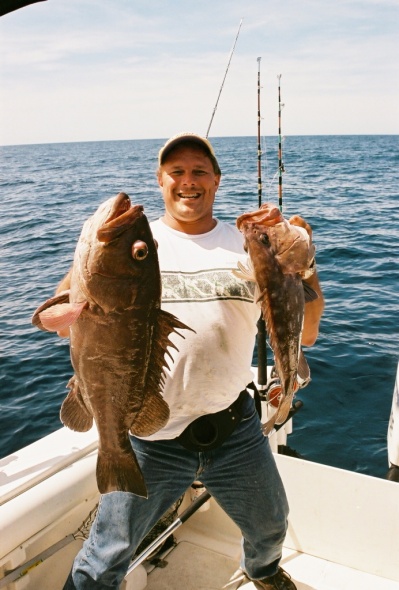
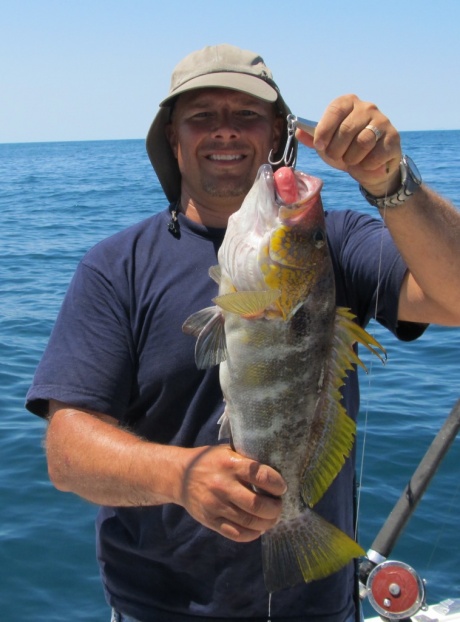
The attached pictures hasve a Gulf Coney (left) and Star-Studded Grouper (right) that were caught together on the same 2-hook bottom rig at the 53 mile reef in 2005; and a Parrot Sand Bass caught in Puerto Lobos in 2011.
4-02-05_Gulf Coney & Star-Studded Groupers.jpgParrot Sand Bass June 2011 .jpg
Ted
Great post Robert. Thank for the interesting and valuable info.
moore_rb
Shawno said:
the publication has a picture of me on page 22, so I'm sure that the researchers know their stuff!


Well, those researchers know a good-looking fisherman when they see one, Shawn... :)
RIC
Thanks Robert, we can always count on you to be thorough. Especially when it comes to research and putting information together. We can all benefit from your efforts.

Ric
don
Ditto Robert!

Superb job!

Several months ago a picture was posted of a WSB caught off Playa Encanto. There is a story behind that pic, and it supports your post Robert regarding commercial panga operators.

Off the shore of Encanto the sea birds were having a hayday, and this persisted for several days. Several of my buddies were also having a great time, catching nice WSB and Groupers.

Then the pangas arrived. The set up multiple drift nets, some within 100 yards of shore, and others started dragging there nets further out, over the reefs. My buddies watched from shore with binos. The pangas' were having a field day, quite a few fish in the nets.
For three days, they netted this area.
Finally they pulled their nets and left.
My buddies went of fishing after the panga's left.

Result- nothing was caught, not even small sand bass or triggers. Nothing.

Since then fishing has been extremely slow in this area. It'll come back once other fish move in though.
jerry
I talked to a Biologist from the Federal fisheries agency out of Mazatlan last summer. He was trying to do his job but had restraints in some areas.The locals said they ignored the big boats and cracked down on the pangas...The politics are deeper than the sea in Mexico. Payoffs seem to get the crackdown to move to other location....June will tell the tailas he said they were going to be all around Lobos up to San Gorge Island
moore_rb
RIC said:
Thanks Robert, we can always count on you to be thorough. Especially when it comes to research and putting information together. We can all benefit from your efforts.

Ric


Thanks Ric... yeah, I guess OCD does have some positive aspects .... :)
dmcauley
Since coming around Robert, you have added a lot to our small group of fisherman. I appreciate the time you devote to "facts"
jerry
TALLAHASSEE - Several species of grouper will be off-limits in state waters in the Gulf of Mexico, while snook fishing is set to reopen on Florida's Atlantic coast.

State wildlife officials say harvesting eight species of grouper will be closed for the season from Wednesday through March 31 in state waters in the Gulf of Mexico, except in Monroe County. well maybe the story isn't quite open and shut.... blaming commercial guys and the pangas when sport fishing boats loaded with high tech equipment catch the limit plus day after day.... it would be cool if Mexico had a area just for sports fishing and we could see the difference after 20 years

http://www.fishingworld.com/News/Read.php?ArtID=000031287 also interesting

Last edited: Apr 30, 2012 at 10:10 PM
moore_rb
jerry said:
State wildlife officials say harvesting eight species of grouper will be closed for the season from Wednesday through March 31 in state waters in the Gulf of Mexico, except in Monroe County. well maybe the story isn't quite open and shut....

[/COLOR][/FONT]
So, you're comparing fishing regulations and population densities in the waters around Florida to the waters in the upper Sea of Cortez? That's cool - but first please do an analysis of the number of sport fishing permits issued in Florida versus the number issued in Northern Mexico. Florida has a population of commercial fisherman about 20x the number who fish the SOC, and a population of sport fishermen about 300x; and Florida's waters and fisheries are HEAVILY monitored by a well funded agency. No one monitors or enforces the fisheries in the Sea of Cortez for population desity or health - if they did, then red lights would be flashing about the fact that no one has caught a statistically significant number of Red Snapper in the SOC for nearly 3 years. They have almost become a coincidental catch.

Also, I'm not sure whether you are familiar with the politics involved with Florida's fisheries regulation - commercial fishing interests there have as much pull as they do in Mexican government. What the commercials want, they get; and the conservative sportsmen pay the bill.

jerry said:

blaming commercial guys and the pangas when sport fishing boats loaded with high tech equipment catch the limit plus day after day.... it would be cool if Mexico had a area just for sports fishing and we could see the difference after 20 years
[/FONT][/COLOR][/QUOTE]

Firstly- I am not "blaming" anyone. I am stating facts. By-catch from shrimping produces more waste than it does shrimp. I dare you to refute that claim with cited sources.

Secondly, commercial panga fishing in the SOC is hardly monitored. The pangueros are free (via NOM- 029) to use the most indiscriminate methods (long lines and gill nets) possible, and no one is ever around to weigh their catch, or to enforce quotas. I'm not criticizing their way of life, or their right to earn a living. I am merely scrutinizing the lack of environmental conservation in their practices. I personally find it nauseating that the mass tonnage of fish taken from this sea does not even go toward feeding the hungry in Mexico - 90% of it goes to Asia - Exploitation in the interest of fast and cheap money.

And regarding sport-fishermen- Who catches and keeps the limit "plus" ? Your statement is based in hyperbole and is offered for nothing but effect.

You need to understand that limits on sport fishermen are POSSESSION limits- not hook and release limits. If I hook 100 fish in a day, and I keep 5 for the smoker, and let 95 swim away, then I am acting legally and responsibly.

Besides, I've never seen a sport boat come in with anywhere near their limit of Grouper or other larger game fish. Not even close.

For example - 2 weeks ago there were 3 of us on my boat- we could have legally hauled 15 dead Grouper back to port, and then the next day we could have gone out and killed 15 more; and told anyone who dared to preach to us about it to go take a flying leap. But we didn't do that - we kept 5 for the entire weekend.... 15% of the legal limit.

I won't speak for all sport-fishermen, but I personally employ all that "high tech gear" to make sure I find fishable water - only in the interest of making sure I get to enjoy a productive and sporting day on the water - it is not in the interest of a productive day of killing and wasting. It would be VERY cool if there were sporting conservation areas closed to all commercial haulage... The entire area from Bird Island to Santo Tomas SHOULD qualify as such an area- since the commercials are not supposed to fish anywhere within 5 miles of any island in the Sea of Cortez, but my last trip out to Bird Island was a boat-fest of gill netters, and hooka divers scraping the bottom clean of scallops.

See Don's story above. Sport-fishermen are NOT impacting manageable fisheries anywhere near the extent that commercial fishermen are. In fact, more often, the sportsmen are the ones who find the fish and end up leading the commercials in to completely scrape the area clean. This is nothing new- Bill Valentine wrote in his book about these intrusive commercial practices taking place back in the 1960's...

Sport fishermen are now forced to maintain secrecy about where they were, what bait they used, and what techniques they employed, so that the exploiters don't go out and use OUR OWN knowledge against us for their monetary gain.

The sport fishing tuna boats in California used to be a tight-knit community that would freely radio each other whenever they found schools of fish- now, they can't do that because the Australian tuna wranglers monitor the radio and will close in on them and throw their nets around the schools of fish that the sportsmen found.


Estero
Mexico does have an area legally reserved for sport fishermen, article 68 provides for a 50 mile zone from the coast, but it only includes essentially top water fish sailfish, marlin, dorado, roosters, etc. Bottom fish aren't covered in the law. And there are big loopholes in the law and enforcement almost non existent. article 68 mexico - Google Search
moore_rb
Estero said:
Mexico does have an area legally reserved for sport fishermen, article 68 provides for a 50 mile zone from the coast, but it only includes essentially top water fish sailfish, marlin, dorado, roosters, etc. Bottom fish aren't covered in the law. And there are big loopholes in the law and enforcement almost non existent. article 68 mexico - Google Search


That's a great point Jim!

Unfortunately having one law to protect sport fishing areas/species, while having another law (NOM-029) that legalizes longlining near shore within that 50 mile zone is completely in conflict... Hooks and bait left out for days are indiscriminate killers. (sea turtles being the hardest hit victims of such practices)

Besides, a law unenforced only binds people to their personal honor. You'll excuse me if I express my skepticism about that. :)
jerry
Well i like fish on the plate or alive my own self.I just have heard some of the Lobo's guys were not to happy about the charter guys coming down and"slaying fish" i am not making that up. The locals at the fish camp were letting the yellowtail go until a American idiot at Santo Tomas(me) showed them how to prep Hamachi...... How to make hamachi yellowtail sushi - YouTube http://www.youtube.com/watch?v=ePOlYyEKTqs&feature=related damn my bad!

High tech gear... well one man uses a hand grenade another cyanide and another uses all tools with the help of national industrial policy..screw the rest of the world " 1% of the world's industrial fishing fleets account for 50% of the world's catches. It is estimated that global fishing fleets are 250% larger than the oceans can sustainably support around the world, so governments provide subsidies of over $15 billion a year to fisheries. Laws often support the fishermen and until recently, the oceans, for all practical purposes, have been within their control.
hmmmm what would that old cow you love so much (Ayn Rand ?)do about this assault on the Ocean...oh yeah that's right nothing...dog eat dog you know...me, i want even imperfect world government efforts made before it's to late.
moore_rb
jerry said:
what would that old cow you love so much (Ayn Rand ?)do about this assault on the Ocean...oh yeah that's right nothing...dog eat dog you know...me, i want even imperfect world government efforts made before it's to late.


Gee, why don't you ask me what I think your hero Mao, FDR, or Hilary would have done about it, because my answer would be the exact same: I haven't the foggiest idea.
jerry
moore_rb said:
Gee, why don't you ask me what I think your hero Mao, FDR, or Hilary would have done about it, because my answer would be the exact same: I haven't the foggiest idea.


I'm a Captain Nemo man myself Captain Nemo - Wikipedia, the free encyclopedia
and Hemingway http://www.juancole.com/images/2012/05/hemingway1.jpg
Last edited: May 1, 2012 at 1:44 PM
Roberto
jerry said:


Commie, Pinko, Ratfink.
Red Drum
Great information...thanks!!
wishamako1
I know I have not fished for a while but a couple of years ago I was at Safe Marina and Arturo called out to me to show me that they were loading a semi with grouper, they had over 200 to 300 grouper in the truck and a pickup showed up with another bunch, we catch grouper and its not a drop in the bucket compared to what the pangueros take, let the tournament continue, its problably someone who cant catch them thats complaining
Ted
Robert-your info is spot on from what I have seen. There are no red snappers for several years now, they used to be abundant!

Here are some numbers for you on the comercial take that I have personally witnessed in Lobos. Three years ago in the spring a fleet of sardine boats came into Lobos. One of their skiffs (the small boat launched from the mother ship that runs a giant net around a school of fish) broke down and washed into the estuary, we went to help and talked to the fisherman, they told me these facts. There were fourteen ships in the fleet each one could hold 100 tons of sardines. They fished for five days around the clock within sight of my house. The crew members told me they would fill the boat in one or two passes with the net and head for Guaymas to off load then come right back for another load.

Two winters ago 200 pangas came to Lobos and caught squid for at least six weeks-when I was there during Christmas the big semi trucks were being loaded around the clock-there was an average of ten trucks lined up on the main road. This winter was a total bust on the squid catch.

This spring was the best yellowtail run I have ever seen in Lobos-huge boils, all big fish. The pangas would encircle the whole school with a big net. Sometimes they caught just a few, sometimes they they loaded the panga.


Last year the locals started catching a lot of halibut in their nets-a few days later the shrimp boats(?) all started netting the area, I watched them go over and over the same few square miles, it lasted about a week and then the halibut were gone.

This is the way it is on the Sea of Cortez.

The sport fishing catch is a but a small percentage of the commercial harvest.

Keep the info coming-education and communication are good for all.
moore_rb
Art and Ted-

Great first hand stories...

Thanks to you both for your contributions to this discussion.
joester
where we have not caught a grouper yet, we do support sport fishing as a great way to help support the economy. too bad commercial fishermen all over the world do not respect the fish as we do - incidental by-catch kills far more fish than sport-fishing. enjoyed the grouper reading - thank you.
"limit your kill, don't kill your limit" is our mantra.
tight lines y'all :)
jerry
image.jpg..Scott who has a house at Santo Tomas and launches his 18 foot boat with A 40 hp Nissan from the beach with his truck "la bomba" has been catching some pretty nice ones this year. Have to come up with some trade goods....
moore_rb
jerry said:
image.jpg..Scott who has a house at Santo Tomas and launches his 18 foot boat with A 40 hp Nissan from the beach with his truck "la bomba" has been catching some pretty nice ones this year. Have to come up with some trade goods....


That old Blazer is one sweeeeeeeet machine.

I once owned a Blue '72 K5 Blazer that I sold 20 years ago and I have regretted it ever since.
jerry
[perspective] | On the Trouble with Farmed Shrimp, by Erik Vance | Harper's Magazine this is pretty good.....what a mess 70% drop in harvest in Kino I hear
jerry
Good news needs to be shared too....setting up this zone might help grouper too http://geo-mexico.com/?p=12648
downloadming.one
Good Job..well done man, keep it up
Jungle Jim
Double tap Ignoranus.........

JJ
Terry C
A person is asking what kind of fish is this?
image
moore_rb
That is a Pinto Bass, Epinephelus Analogus

Locals will also sometimes call them Cabrilla
jerry
moore_rb said:
That is a Pinto Bass, Epinephelus Analogus

Locals will also sometimes call them Cabrilla

jerry
http://www.elimparcial.com/EdicionEnLinea/Notas/Sonora/06122017/1284412-Mar-de-Cortes-el-laboratorio-del-mundo.html. Good series....The Grouper are being focused on again by some of the Panga fishermen to an increased extent....It would be interesting if the fishermen went back and looked at there catch pictures from 30 years ago to today...
jerry
Old school before the Mexican fleet,the delta water flow cut off and global warming cut the catch. ...https://www.facebook.com/greg.buser.3/posts/2025755717689850
Wood Spinner
I agree on the pongas and their long lines fishing close in say 3 miles because this is where many of the spawn start their growth period.
I also hate the little old Mexican guy that walks out at low tide and stretches a 100 ft net and takes all of the little fish. But we must remember many of these guys have no other way to help feed their families.
Many of the Americans fail to realize the poverty level and the consequences thereof down here. Be tough but a little caring
GringoZona
moore_rb said:

Ok, I'm hearing rumors that the annual RP fishing tournament is stirring a lot of controversy from the "All you fisherman A-holes are raping the ocean" crowd, so I was pulling together my library of articles and scientific research about our fishing area, and thought this would be a good time and place to share what I've learned.

I thought it might be valuable to others here in the fishing forum that want to learn more about the ecology, species, and biologies of the reefs we fish (and dive) on in the upper Sea of Cortez, and might help those of you that are pre-disposed to express disdain toward sport-fishermen for the "rape and pillage" image that we project.

I am a responsible sportsman - I study the nature of the sport I enjoy. I have no interest in catching the "last" grouper in the Sea of Cortez. When I take fish to consume them , there is absolutely no waste, and I make sure every shred of edible flesh is consumed. I even donate the heads to the guys at the Marina (or other locals) to make soup from (a 30 pound gulf grouper can produce about 2 pounds of edible flesh from his head alone).

Below I will post several scientific articles and resources to back up my points, but here are the "cliff's notes" and some of the most common misconceptions I've come across in the years I've been fishing these waters and talking with other people about grouper fishing:


1) Wrasses and Groupers are not all males that later turn to female - it is the opposite. All wrasses (sheepshead is the most common one we catch) and ALL Grouper species are born female. Only the most aggressive and territorial will "convert" to males. They are "harem" spawners- the males are solitary until spawning time, when they herd up a group of females and spawn with them repeatedly until the spawning season is over.

2) Prior to popular belief (and opinion) - Grouper do NOT have small reproductive rates - a single 10 pound Sardinero can produce 5 milllion eggs in one season, and will spawn an average of four times between mid March and early June. Ditto gulf Grouper, who can produce up to 20 million eggs in one season.

3) Grouper do not "nest" when they spawn. They aggregate (school up) in large numbers, and the males "round up" and spawn with their own individual harems of females. The fertilized eggs drift in the current, and hatch after about 30 days. The hatched larvae spend the rest of that season drifting in the plankton. When the larvae finally drop out of the planktonic phase, they begin eating (and growing) aggressively.

4) Grouper are NOT slow growing - and they do not live for centuries. A Gulf Grouper will be about 5 pounds (and fishable) 2 years after they drop out of the larval (planktonic) stage. The average 20-40 pound Gulf Grouper is about 5 years old. a 5 year old Sardinero can be 10-25 pounds. The biggest 200 pound+ Gulfies might be 30 years old. Biologists "age" groupers using bones in the ear that form seasonal rings (like a tree).

There is no scientifically substantiated evidence of Gulf Grouper living more than 50 years- the longest lived Gulf Grouper on record was about 35 years old- the same as a large (30 lb +) White seabass, or the same as a large (40lb+) yellowtail. Funny how no one ever goes all crazy about someone catching and keeping a 30 year old White Seabass...?

Black seabass are indeed very long lived (75 years or more), and are highly susceptible due to lower reproductive rates, but Black Seabass also move around alot more than grouper do - the two only share similar external appearance, they have totally different biologies, physiologies and behaviors.

5) The harvest of Grouper by sportfishermen (assumming they adhere to their legal limits) is statistically insignificant to the population density of these species. The by-catch of commercial shrimping (as well as deliberate over-harvest by commercial panga operators) is the largest population threat to these fisheries- and if you completely eliminated sportfishing alltogether, the result would not be an increase in any species' survival or population rates.

6) Regarding Gulf grouper being listed as endangered - This data is skewed by the Gulf grouper's naturally limited home range - this is not a globally common species- but within its natural range, Gulfies are not "uncommon" at all; nor is the number of REALLY big (150lb+) fish - Every time we are out fishing for grouper, our "lost to landed" ratio says that there a bunch of fish out there that are simply too big for sport fishermen to deal with using rod and reel. when a fish can pull drag (and ultimately break) 200lb test fishing line, then that fish ain't no 80 pounder.

The technical limits of the average rod and reel naturally limits the harvest of monster grouper - they simply overwhelm our gear far more often than we get them out of the rocks and up to the boat. So, just because the pictures we all post from our trips seem to "top out" around 80-90 pounds does not mean there are no bigger fish out there. They are out there.

7) Back to the whole "male versus female" thing - I think a lot of people confuse grouper population dynamics with freshwater bass (where the males are smaller and outnumber the larger females 5:1), and where removing females (especially at spawning time) is damaging - THIS IS 100% INACCURATE with regards to Grouper.

A grouper has to be a mature female who has spawned at least once before she can "switch" to male (the ovaries actually convert to testicles due to hormone changes) - Here are more facts:
  • Once male, a grouper can never "go back" to female.
  • due to age, size, and population distribution statistics, just about EVERY 100lb plus Gulf grouper will be male. Removing these fish reduces the already disproportionate male to female ratio. (That's why no one has seen a picture taken on my boat of a 100lb+ fish - I will simply NOT allow one that big to be brought aboard and kept- but that really doesn't matter- Like I said above, most 100lb and bigger fish release themselves shortly after being hooked anyway, and all the fisherman gets is that "snap" feeling and the opportunity to break another $4 hook out of the tackle box.

So, when you catch a 50-80 pounder that is full of eggs, that's not a bad thing- it's a good thing, because fish in that size range are SUPPOSED to be females. Taking a big one WITHOUT eggs would be bad, becasue you are removing the already more rare males; and it can take 2 years for a female to complete the "sex-change" and become a spawning-capable male.


So, Here are all the scientific studies that will back up the points I expressed above. I encourage everyone to read, study, and discuss these data, but don't think for a minute that you are going to show me the "error of my ways"... I enjoy fishing. I do it responsibly, and if you try to get in my face with your "enviro-religion" then I am going to debate you with FACTS.... so you better be prepared.


Gulf Grouper- biology, and sexual lifecycle:

http://www.reefresilience.org/Toolki...0_Problem.html

http://www.iucnredlist.org/apps/redlist/details/14049/0


Leopard Grouper (aka Sardinero) age and growth rates:

http://scholarspace.manoa.hawaii.edu/bitstream/handle/10125/2497/v55n2-171-182.pdf?sequence=1

Summary- most of the Sardineros we catch between 10 and 25 pounds are about 5-10 years old.


Sea of Cortez Ecology, populations and harvest rates for a bunch of different Serranids, including the Groupers and Gold Spots:

http://cmbc.ucsd.edu/People/Students/aburto/Ciencia_y_Conservacion_Vol2008No1_eng.pdf


Now, the one species that I have not found a ton of research on are Pinto Bass, but I did find some interesting videos about Nassau Grouper spawning rituals and fishing policies in the Carribean. The Nassau Grouper is in the same scientific Genus (Epinephelus) as Pinto Bass, so I would bet that Pintos spawn in a similar "mass spawning" fashion:

http://www.youtube.com/watch?v=JFbJsj8KdSI


Like I said- This post is intended to help educate and spread factual scientific data. If it inspires discussion, then that's great, but if it leads to ad hominem attacks against sport fishing, then the gloves are coming off... :)


I loved but I think u put in the wrong slot
Old55
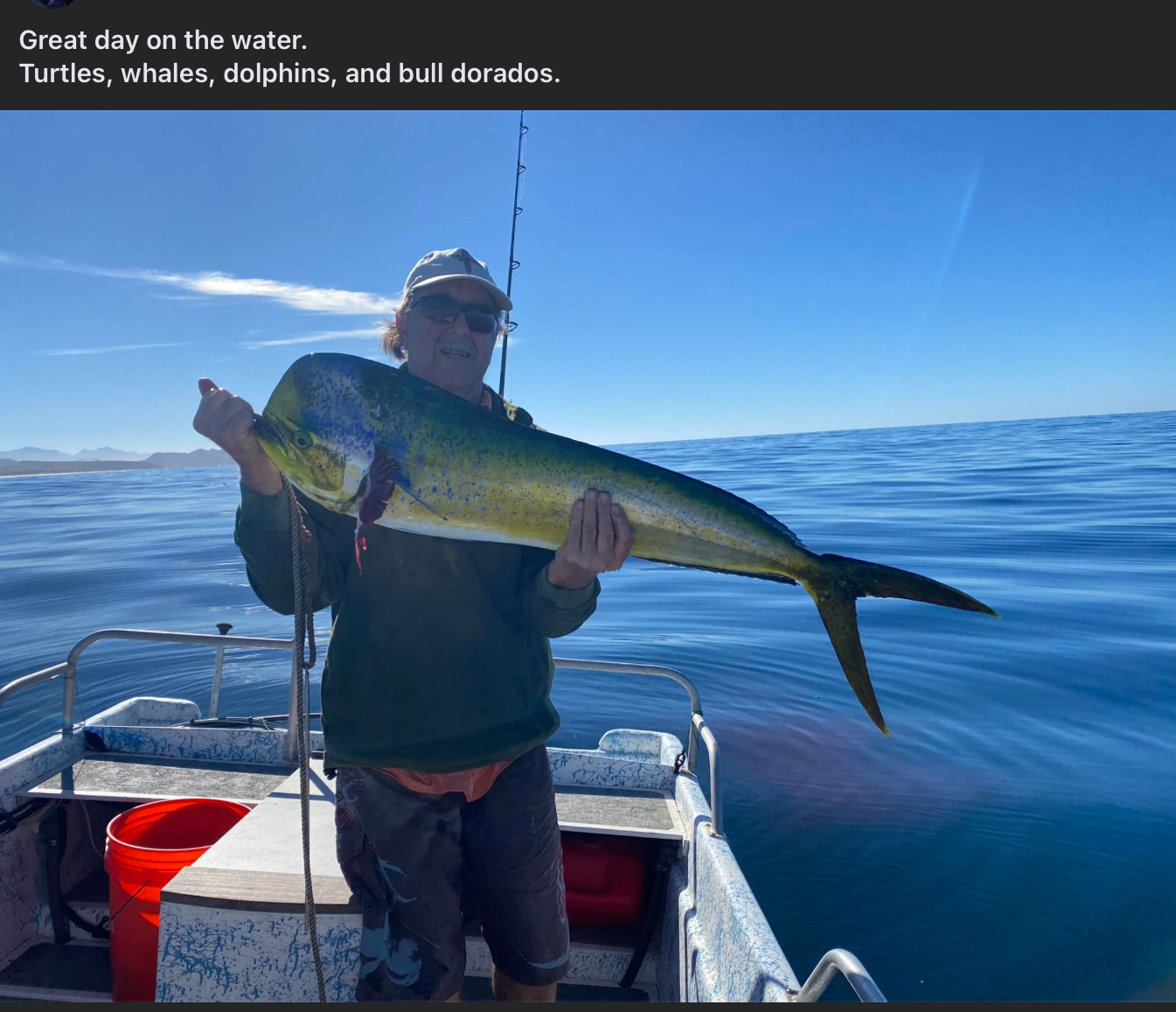
You get way more like this these days than the big ones....the ST boys were down in Lobos yesterday until it got too windy87908830-CBCD-433F-986F-04C522EACCA8.jpeg
Old55
12 year old thread … is RB Moore still kicking? The only hope : https://www.pewtrusts.org/en/projects/pew-bertarelli-ocean-legacy-baja-californias-pacific-and-the-sea-of-cortez
Mexico Joe
Old55 said:


Maaaaaaaaaaannnnnnnnn. I hope so. I would love to have his fishing advice at this point in my life. I believe Shawno the god still frequents the italian spot... mostly pro grouper fisherman hangout. I'm not worthy and our dinner enjoyment rate is only 50% at said establishment. RB Moore was an alleged pro that would hang out there too... Guy is a god! These gods have pictures all over the wall at that Italian spot...

RIP RB MOORE. An absolute legend!!!!!

A GOD in his time!

GOD SPEED MOORE!

P.S. If you can please help me catch MOORE grouper I'd be obliged to honor you as the GOD that you are!

P.S. Again. I have a boat now. So not shore grouper RB MOOOOOOOOREEEEEEEEE ....


PS... HOOK A BROTHER UUUUUUUUUUPPPPPPPPPPPPP!!!!!!!!!!!
Old55
Interesting…https://www.floridamuseum.ufl.edu/discover-fish/species-profiles/epinephelus-itajara/#:~:text=Growth%20rates%20are%20slow%2C%20averaging,per%20year%20after%2025%20years.
moore_rb
Mexico Joe said:

RIP RB MOORE. An absolute legend!!!!!

A GOD in his time!

GOD SPEED MOORE!


Thankfully, I’m not dead….

Older, busier (with life), and more preoccupied with getting my kids transitioned into responsible young adults than with boating fish, but coming back to revisit this thread has reminded me that the boat needs to be washed, serviced, and readied for a trip to the RP… soon.
Don Juan
How does one land a job as a deck hand on the SS RB Moore? I'm also working on getting my last child off to adulthood (2 down and one to go). I come down often, sold my freshwater boat and am shopping for a cape horn or whaler for RP. in the meantime I've been fishing with the guys out of the Marina, reading all the good books like super grouper and talking with the captains in cholla and Gawdy at phx fishing supply.

I'll wash that boat for you and fill the gas tanks.....

;)

ill be down this weekend for the shore fishing tournament on Sunday in Mirador.

moore_rb said:

Thankfully, I’m not dead….

Older, busier (with life), and more preoccupied with getting my kids transitioned into responsible young adults than with boating fish, but coming back to revisit this thread has reminded me that the boat needs to be washed, serviced, and readied for a trip to the RP… soon.
randy and patty
Where’s Mexico Joe?
Old55
Gotta go over to LA Paz again sometimehttps://fishreport.jonathanroldan.com/category/sea-of-cortez/
Old55
Friend caught this off Baja Pacific side IMG_6987.jpegtoday….need to visit